Quotes priced from the job. Invoices that are never retyped.
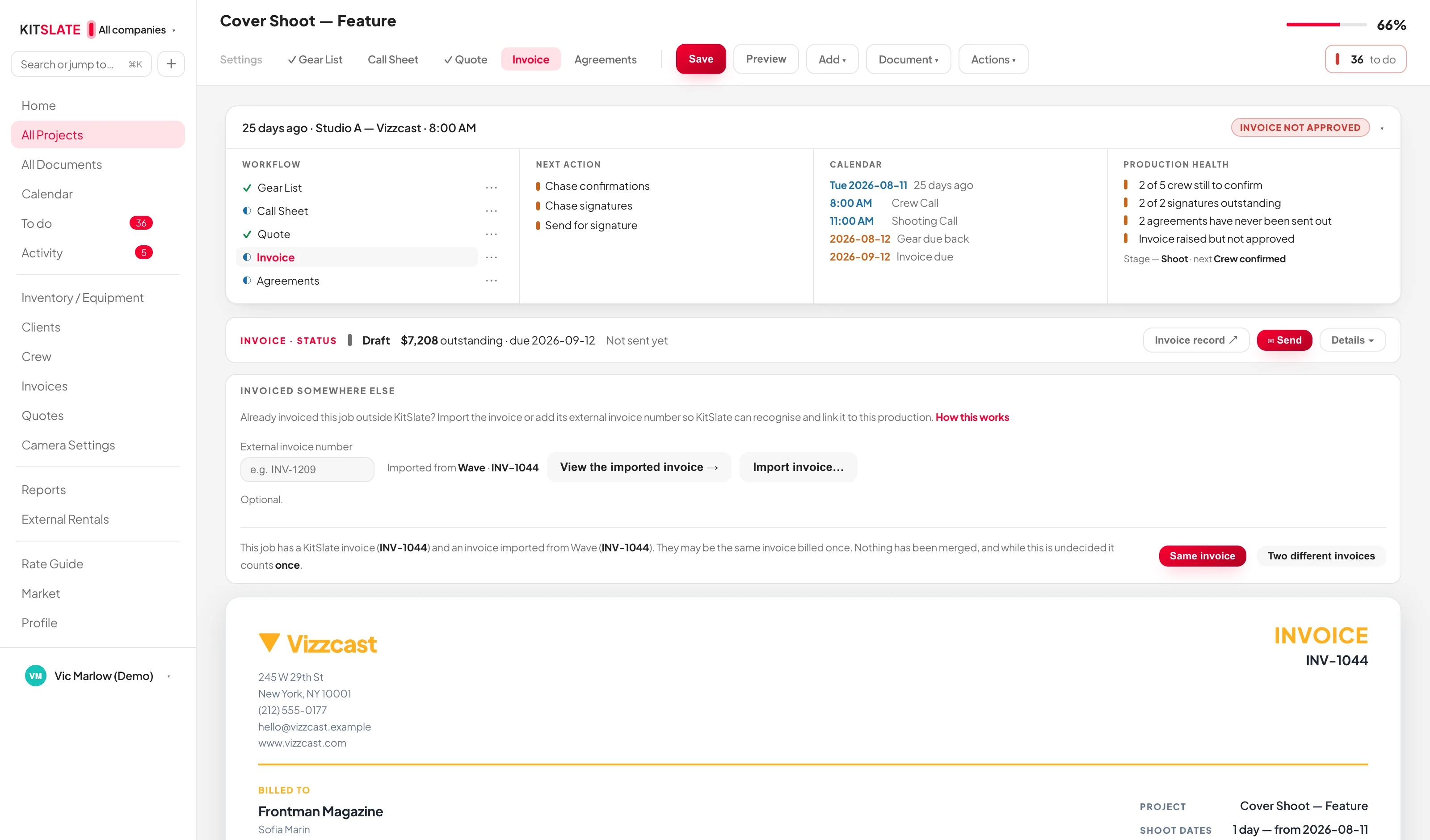
The quote pulls its equipment from the gear list and its crew from the call sheet. The invoice is a frozen copy of the approved quote with its own number, a hosted page the client can pay on, and a version history that never edits the past.
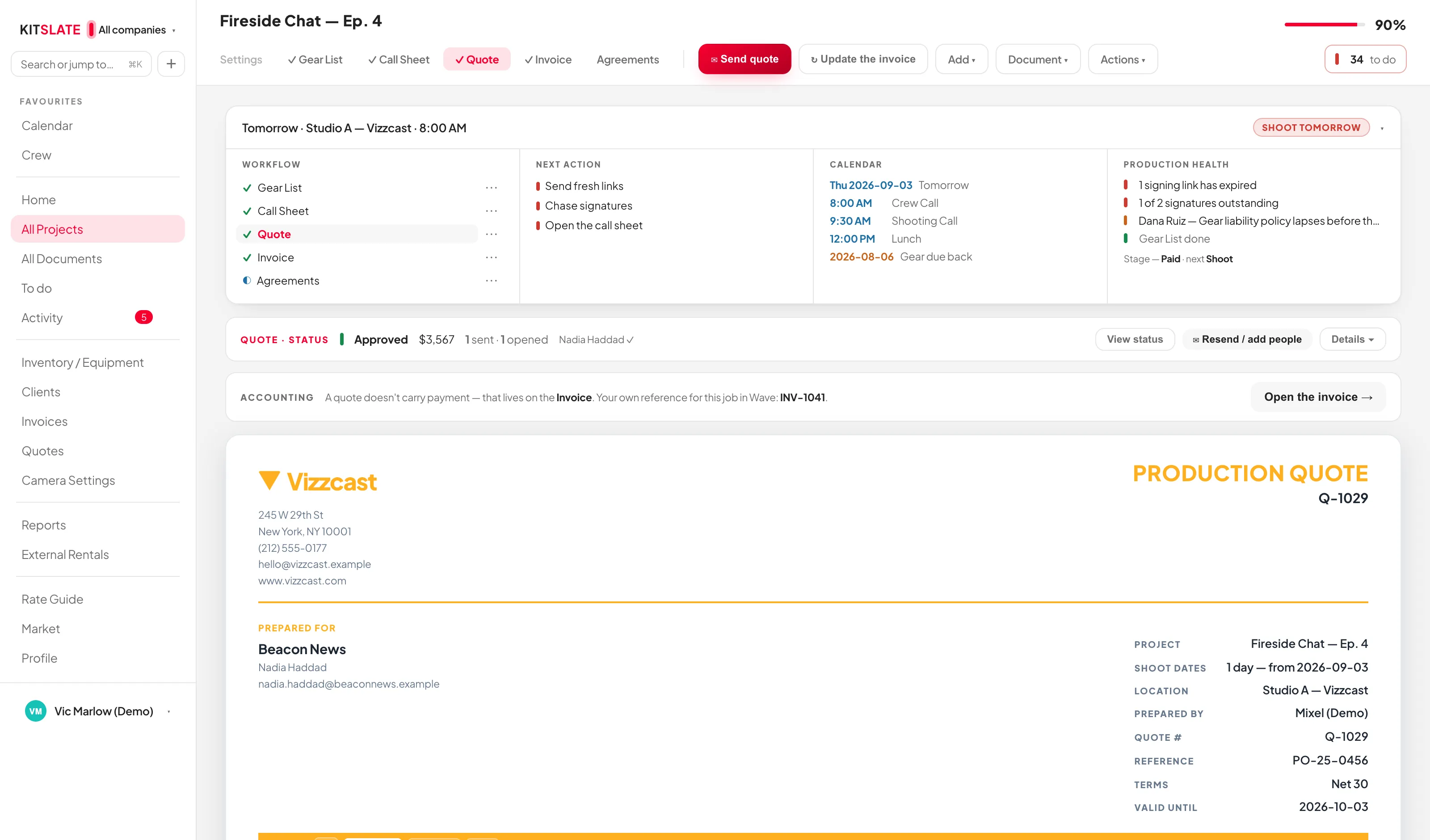
Each section collapses to one client-friendly line.
STUDIO, EQUIPMENT, LABOUR / CREW, MISC and BANKING / PAYMENT FEES. Every section header has Show all, One line or Hide — so the client sees Equipment package — $1,285 instead of thirty rows, and the detail stays saved.
Turn into invoice, and it stays honest.
You never start an invoice from scratch on a production: → Turn into invoice on the quote. It takes its own date and terms, and its number the moment it is first published or sent.
What is owed, what is overdue, what came in.
Invoices in the sidebar is every invoice you have raised. Overdue in red, due within thirty days, paid this month by the date the money arrived, and the average time to get paid.
Before you try it.
Does KitSlate take a cut of payments?
No. Card payments run through your own Stripe account and land in your Stripe balance. KitSlate never holds funds and takes nothing from them.
Can I raise an invoice without a quote?
Yes. Create invoice on the Invoices page raises a standalone invoice under its own number. A production's invoice starts from its approved quote.
Does it connect to my accounting software?
No. Each invoice has an accounting reference field for the number your books carry, and invoices raised elsewhere can be imported read-only with the original file attached.
I sent an invoice and it is wrong. Now what?
Edit it. That creates a revision the client cannot see; publish the update and their link shows the new version with an Updated invoice notice. A paid invoice is corrected with a credit note or a second invoice.
Price a real job in five minutes.
The sandbox has a gear list and a crew ready to pull onto a quote. Turn it into an invoice and open the client's page.